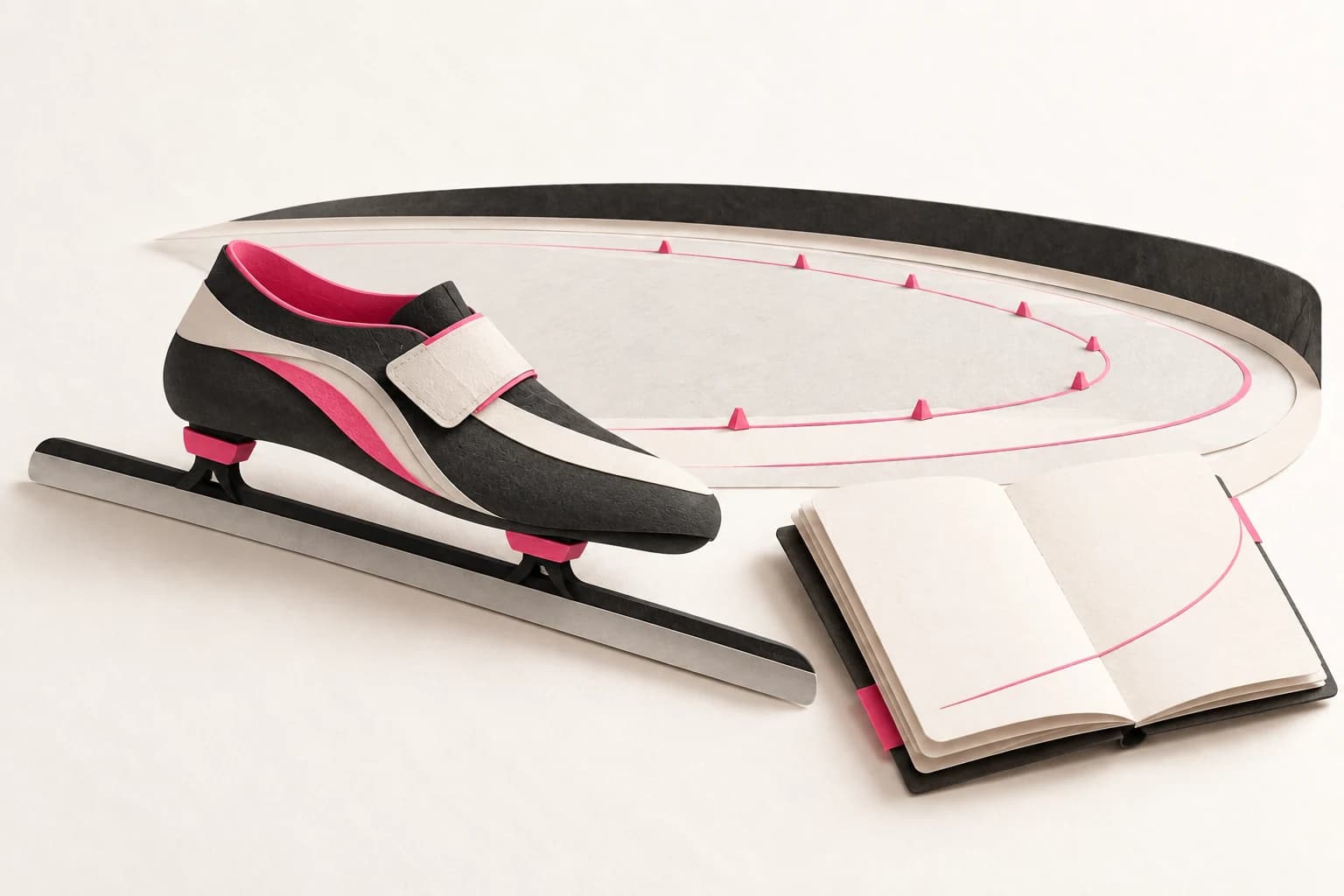
We inspected the rendered images on three OnlyDetect articles: a search guide, a pricing guide and a speed-skating profile analysis. Each image loaded, had descriptive alternative text and declared dimensions, and carried a caption explaining that it was an editorial illustration. That is a small implementation check, not evidence that the images rank in search.
What the three images communicate
The search guide uses a magnifying glass and profile cards to illustrate matching a public handle. The pricing guide uses comparison sheets and separate components to illustrate comparing like with like. The athlete analysis uses a paper speed skate and rink to establish its sporting subject without pretending to depict the named person.
These are different editorial jobs. A conceptual image can introduce a decision or subject, but it cannot serve as proof of an account's contents. A generated athlete portrait would create a different risk: readers could mistake an invented person or scene for documentary evidence. We therefore label the illustrations and keep factual claims in sourced text.
The published observation record identifies the three pages and preserves their observed alternative text and technical fields.
What we checked in the page
All three rendered images declared a 1536-by-1024 intrinsic size and supplied a responsive srcset. The browser reported that the images had loaded. Each had a nonempty alternative description and a nearby illustration disclosure.
Those observations answer bounded questions: is an image present, does it have a text alternative, and is its illustrative role stated? They do not measure loading speed, prove that the alternative text works for every reader, or establish a search-engine ranking benefit.
The W3C image decision tree makes purpose and context central to choosing an alternative. Meaningful images need an appropriate description; purely decorative images can need an empty alternative. Adding keywords to every image is not the decision rule.
What this means when evaluating a creator guide
Read a caption before treating a header image as account evidence. A microphone, skate or notebook can describe an article's theme without showing anything from a creator's subscription. A real screenshot would require its own source, date and explanation of what was actually observed.
This audit selected three pages deliberately, after their images were assigned. It did not sample all articles randomly, run assistive-technology sessions or test search visibility. It also did not compare generated images against commissioned photography.
For factual account checks, use the official-link guide. For another example of why a technical success signal is narrower than a content claim, read our HTTP-response experiment.